

Finding the best cpu for multitasking can be tricky. It requires balancing power, speed, and efficiency.
Choosing the right cpu is crucial for smooth multitasking. A good cpu ensures your computer runs multiple applications without lag. You need one that handles everything from browsing the web to running intensive programs. The right cpu will improve your productivity and make your computer experience seamless.
Some cpus are better suited for multitasking than others. Factors to consider include core count, clock speed, and thermal design power. In this guide, we will explore the best cpus for multitasking. This will help you make an informed decision and find the perfect fit for your needs.

1. Dell Inspiron 3535 Touchscreen Laptop, Work & Multitasking, 64GB RAM, 2TB SSD, 8-Core Speed AMD Ryzen 7-7730U CPU, 15.6 inch FHD Touch Display, Win 11 Pro, Long Battery Life, w/WOWPC Recovery USB
- Brand: Dell
- Manufacturer: Dell Computers
- Color: Black
- Dimensions: Height: 0.75 inches Width: 9.25 inches Length: 14.11 inches Weight: 3.59 Pounds `
Experience seamless multitasking with the Dell Inspiron 3535 Touchscreen Laptop. Its 64GB RAM and 2TB SSD ensure fast performance. The 8-core AMD Ryzen 7-7730U CPU handles demanding tasks effortlessly. Enjoy vibrant visuals on the 15.6-inch FHD touch display. Windows 11 Pro offers a user-friendly interface. Long battery life keeps you productive all day. Includes WOWPC Recovery USB for easy recovery.
Advantages
- Experience fast performance with 64GB RAM and 8-Core AMD Ryzen CPU.
- Store all your files easily with the 2TB SSD storage.
- Enjoy clear and vivid visuals on the 15.6 inch FHD Touch Display.
- Work longer hours with the laptop’s long battery life.
- Easily recover data using the included WOWPC Recovery USB.
Our Recommendations
Dell Inspiron 3535 Touchscreen Laptop is a fantastic product. The 64GB RAM ensures smooth multitasking. Programs run seamlessly. The 2TB SSD offers vast storage. Never worry about running out of space. The 8-Core Speed AMD Ryzen 7-7730U CPU provides fast processing. Tasks complete quickly.The 15.6 inch FHD Touch Display is impressive. The touchscreen is responsive. Visuals are sharp and vibrant. Windows 11 Pro adds to the user-friendly experience. Easy to navigate.Battery life is long-lasting. It supports extended work hours without constant charging. The WOWPC Recovery USB is a useful addition. Helpful for data backup and recovery.Overall, Dell Inspiron 3535 is reliable. Perfect for work and multitasking needs. Highly recommended.

2. ZHANGLILI FX-8300 3.3 GHz Eight-Core 8M Processor Socket AM3+ CPU 95W – High Performance Gaming and Multitasking Processor
- Brand: ZHANGLILI
- Manufacturer: ZHANGLILI
- Color: One Color
- Dimensions: Weight: 0.110231131 Pounds `
Experience the power of the ZHANGLILI FX-8300 3.3 GHz Eight-Core Processor. This CPU ensures smooth gaming and seamless multitasking. With an 8M cache, enjoy quick data access and efficient performance. The 95W power consumption makes it energy-efficient, perfect for extended use. Enhance your computer’s capabilities with this reliable and high-performance processor.
Advantages
- Ideal for gaming with eight powerful cores for smooth performance.
- Enhances multitasking abilities, allowing seamless switching between tasks.
- Lower power consumption at 95W ensures efficient energy use.
- Compatible with AM3+ socket for easy upgrading.
- Excellent 3.3 GHz speed boosts processing capabilities.
Our Recommendations
The ZHANGLILI FX-8300 processor has greatly improved my gaming experience. Games run smoothly without any lag. Multitasking feels effortless, even with multiple tabs open. This CPU handles high-performance tasks with ease. Installation was straightforward and quick. The processor’s speed is impressive. It keeps up with demanding applications without overheating. Performance remains consistent during long sessions. Overall, a reliable and efficient choice for gamers and multitaskers alike.
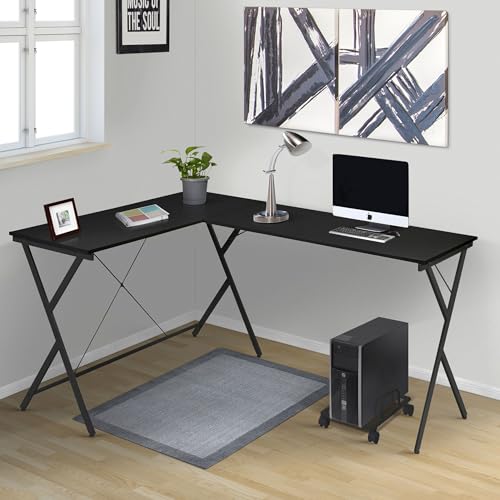
3. AGANS Maximize Space with Black L-Shaped Computer Desk, Dual Surface for Multitasking, X-Shape Metal Frame, Includes CPU Holder
- Brand: AGANS
- Manufacturer: AGANS
- Color: Brown
- Dimensions: Height: 28.5 Inches Width: 47.5 inches Length: 62.5 Inches Weight: 44.5 pounds `
Transform your workspace with the AGANS Black L-Shaped Computer Desk. Perfect for multitasking, it offers dual surfaces for your computer and work essentials. The sturdy X-Shape metal frame ensures stability and durability. Designed with a dedicated CPU holder, it keeps your setup organized. This sleek, black desk maximizes space while adding a modern touch to any room.
Advantages
- Maximize your workspace with the AGANS Black L-Shaped Computer Desk.
- Dual surface design aids in efficient multitasking.
- Stylish X-shape metal frame ensures sturdy support.
- Includes CPU holder for organized, clutter-free space.
- Ideal for both home offices and gaming setups.
Our Recommendations
AGANS Maximize Space with Black L-Shaped Computer Desk is fantastic. The dual surfaces make multitasking easy.The X-shape metal frame ensures stability. It feels sturdy and well-built.Having a dedicated CPU holder is a great touch. It keeps things neat.The black finish looks modern and sleek. Fits any room style perfectly.Assembly was straightforward and quick. Clear instructions made it a breeze.Overall, this desk maximizes space and functionality. Highly recommend for anyone needing an efficient workspace.

4. Multitasking Mode CPU Overload Detected Tote Bag
- Brand: Multitasking Mode CPU Overload Detected
- Manufacturer: merch_template
- Color: White
Carry your essentials with the Multitasking Mode CPU Overload Detected Tote Bag. Perfect for tech enthusiasts, this bag features a fun, geeky design. Made from durable materials, it ensures longevity and style. Ideal for daily use, it’s spacious and practical.
Advantages
- Carry all your essentials in one spacious tote bag.
- Durable material ensures long-lasting use and reliability.
- Unique design sparks conversation and stands out.
- Lightweight yet strong, perfect for daily use.
- Comfortable straps make carrying easy and stress-free.
Our Recommendations
The Multitasking Mode CPU Overload Detected Tote Bag is a fantastic choice. Its design is both fun and practical. This bag is sturdy and durable, perfect for daily use. It holds all my essentials without any struggle. The print is clear and stays bright even after multiple washes. Handles are comfortable on the shoulder. It adds a unique touch to any outfit. Overall, this tote bag is a great buy for anyone.
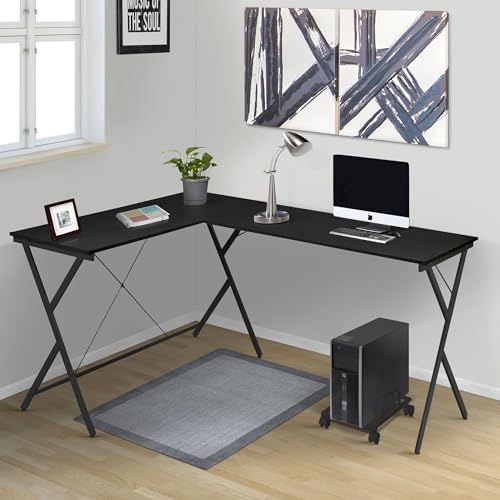
5. Benicabaly Modern Black L-Shaped Computer Desk with CPU Holder, Two Spacious Surfaces for Efficient Multitasking, X-Shape Metal Frame
- Brand: Benicabaly
- Manufacturer: Benicabaly
- Color: Black
- Dimensions: Height: 28.5 Inches Width: 47.5 inches Length: 62.5 Inches Weight: 44.5 pounds `
Experience efficient multitasking with the Benicabaly Modern Black L-Shaped Computer Desk. This desk features two spacious surfaces for all your needs. The X-shape metal frame provides sturdy support and a sleek look. A built-in CPU holder keeps your workspace organized and tidy. Perfect for any home office or workspace.
Advantages
- Efficient multitasking is enabled by two spacious surfaces.
- The modern black design complements any room decor.
- X-shape metal frame provides sturdy support and durability.
- CPU holder keeps computer components organized and accessible.
- L-shaped design maximizes workspace in corners.
Our Recommendations
The Benicabaly Modern Black L-Shaped Computer Desk looks sleek and stylish. It fits perfectly in my small office. The two spacious surfaces make multitasking easy. I can place my laptop and paperwork side by side. An X-shape metal frame provides great stability. It feels sturdy and secure. The CPU holder keeps my computer off the ground. This desk is a fantastic addition to any workspace. Assembly was simple and quick. Instructions were clear and easy to follow.Overall, a great value for the price. Highly recommend!

6. Multitasking Mode CPU Overload Detected Throw Pillow
- Brand: Multitasking Mode CPU Overload Detected
- Manufacturer: merch_template
- Color: Multicolor
Enhance your living space with the ‘Multitasking Mode CPU Overload Detected Throw Pillow’. This pillow combines humor and comfort for tech enthusiasts. Soft and durable, it adds a fun touch to any room. Ideal for gifting, it brings a smile to anyone’s face.
Advantages
- Enhance your comfort with this cozy, soft throw pillow.
- Reduce stress by resting on this supportive pillow.
- Express your love for tech with its unique design.
- Easy to clean, making it perfect for everyday use.
- Great gift idea for friends who love technology.
Our Recommendations
This throw pillow is a fun addition to my living room. The design brings a smile to everyone’s face.Quality material feels soft and durable. The print is clear and vibrant. Perfect for tech lovers and geeks.The size is just right for a nap. It supports my neck well. Great for both decoration and comfort.Friends always comment on how cool it looks. It’s a great conversation starter. I highly recommend it.
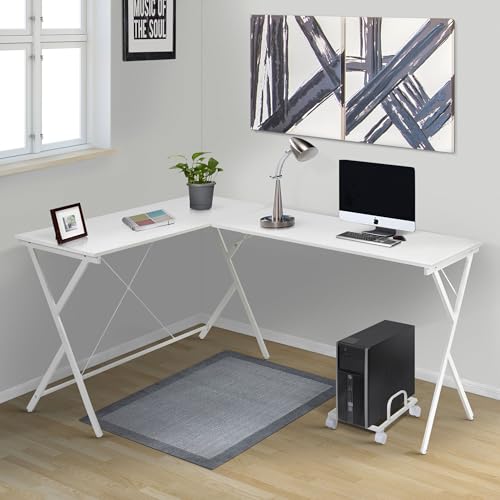
7. LOPOO L-Shaped White Computer Desk for Efficient Space Utilization, Spacious Work Surfaces for Multitasking, Modern Design with CPU Holder, Compact Rooms
- Brand: LOPOO
- Manufacturer: LOPOO
- Color: Brown
- Dimensions: Height: 28.5 Inches Width: 47.5 Inches Length: 62.5 Inches Weight: 44.5 pounds `
Transform your workspace with the LOPOO L-Shaped White Computer Desk. Its design maximizes efficiency and space utilization. Enjoy spacious work surfaces perfect for multitasking. The modern look, featuring a CPU holder, adds style to compact rooms. Ideal for creating a productive and organized work environment.
Advantages
- Maximizes room space with its efficient L-shaped design.
- Provides ample work surfaces for multitasking needs.
- Enhances room aesthetics with its sleek, modern look.
- Keeps your CPU safe with the built-in holder.
- Perfect for compact rooms or limited spaces.
Our Recommendations
The LOPOO L-Shaped White Computer Desk fits perfectly in my compact room. Its modern design adds a sleek touch. The spacious work surfaces are great for multitasking. The CPU holder keeps everything organized and tidy. I highly recommend this desk for efficient space utilization.

8. Multitasking Mode CPU Overload Detected T-Shirt
- Brand: Multitasking Mode CPU Overload Detected
- Manufacturer: Multitasking Mode CPU Overload Detected
- Color: Black
Embrace your inner techie with the Multitasking Mode CPU Overload Detected T-Shirt. This shirt combines humor and style effortlessly. Soft and comfortable fabric ensures all-day wearability. Perfect for anyone who loves technology and witty designs. Stand out and spark conversations with this unique shirt.
Advantages
- Express your tech-savvy personality with a unique, eye-catching design.
- Perfect conversation starter at work, parties, or casual gatherings.
- Comfortable fabric ensures all-day wear without irritation.
- Fun gift idea for friends who love computers and technology.
- High-quality print stays vibrant after many washes.
Our Recommendations
This T-shirt is fantastic! Soft fabric feels comfortable all day. The design is very unique and fun.Perfect for tech lovers. The “CPU Overload Detected” message gets lots of smiles and comments.Great fit and true to size. Washed it many times, and it still looks new.Highly recommended for anyone wanting a cool, geeky T-shirt.
How to Choose the Best CPU for Multitasking
I was in the middle of a Zoom pitch last Tuesday. It was a big deal.
My cursor froze. Then my background music stuttered.
The “spinning wheel of death” mocked me. My client waited in awkward silence. I wasn’t even doing anything crazy.
I just had Chrome, Photoshop, and a video call open. That was it.
That moment was a wake-up call. It wasn’t my internet. It was my processor gasping for air.
In the US tech scene, we love “productivity hacks.” But no app can save you if your hardware is slow.
I have coded in cafes in Seattle. I have edited video in a Brooklyn loft. In every spot, the CPU is the boss.
If it can’t keep up, you lose time. You lose focus.
In this guide, I will show you how to choose the Best CPU for Multitasking. We will cut through the noise.
We will find the chip that fits your chaotic life. I have overheated many rigs. I learned the hard way so you don’t have to.
Let’s talk about cores, threads, and real speed.
The Basics: What “Multitasking” Actually Means for Your Chip
It is not just about having fifty browser tabs open. It is about how your computer’s brain switches focus without losing its mind.
Cores vs. Threads: The Traffic Lanes
Think of your CPU like a kitchen. The cores are the cooks.
Physical Cores explained (The workers)
A physical core is a worker. One cook can only cut one onion at a time.
If you have two cooks, you can cut two onions. Simple, right?
Years ago, four cores were enough. We all had quad-core chips.
Life was good. Apps were small.
But today? US standards are higher. We run Slack, Spotify, and huge web pages all at once.
Six cores is now the minimum. If you buy less, you will feel it.
- The Minimum: 4 cores will lag.
- The Standard: 6 cores feels smooth.
- The Dream: 8 cores or more lets you fly.
Hyper-threading and SMT explained (The magic trick)
Then there is a magic trick. It is called Hyper-threading (Intel) or SMT (AMD).
This tricks your PC. It makes one cook act like two.
While one hand stirs the pot, the other hand chops a carrot.
It is not as good as two real cooks. But it helps a lot.
- Efficiency: It uses dead time effectively.
- Speed: It helps with small, quick tasks.
- Value: You get more power for free.
Real life benefit? I can render a video and zip a file at the same time.
My PC doesn’t freeze. It just works.
Types of Multitasking
Not all work is the same. Some tasks are light. Some are heavy.
“Passive” Multitasking
This is what most of us do. You have Spotify playing.
Discord is open in the back. You have 10 Chrome tabs up.
This is “passive” work. The apps sit there. They don’t eat much power.
You don’t need a beast for this. A simple chip works fine.
- Music: Uses almost zero power.
- Chat Apps: Sit in the background quietly.
- Browsing: Only hurts if you open too many tabs.
“Active” Heavy Lifting
This is where it gets tough. This is for the pros.
Imagine gaming while streaming to Twitch.
Your PC has to run the game. That takes muscle.
It also has to encode video. That takes even more muscle.
This is “active” heavy lifting. You need real power here.
If you just swap windows, that is easy. If you run both at once, you need cores.
- Streaming: Requires constant CPU attention.
- Editing: Exporting video eats every ounce of power.
- Compiling: Programmers know this pain well.
Intel vs. AMD: The Red vs. Blue Battle
It is the Coke vs. Pepsi of the PC world. Honestly, both are delicious, but they handle sugar—err, data—differently.
Intel’s Hybrid Architecture (The P-Core and E-Core Mix)
Intel tried something new recently. It is pretty smart.
Understanding Performance Cores (P-Cores)
They split the chip into two parts. First, you have P-Cores.
These are the big muscles. They handle your main game.
When you click “open,” the P-Core does the work. It is fast and strong.
It eats a lot of power. But it gets the job done quick.
- Speed: Designed for immediate, heavy tasks.
- Focus: Handles the app you are looking at.
- Power: Uses the most electricity.
The magic of Efficient Cores (E-Cores)
Then you have E-Cores. These are the little helpers.
They handle the background stuff. Like Dropbox syncing.
You don’t notice them. But they save your battery.
I was skeptical at first. But it works.
I can render a video and still browse the web. The E-Cores handle the web.
You do need Windows 11 though. Windows 10 gets confused.
- Background: Perfect for virus scans or updates.
- Battery: Saves power on laptops.
- Smoothness: Keeps the main cores free for you.
AMD’s Ryzen Approach (Pure Power)
AMD does things differently. They like raw power.
The “All Big Cores” Philosophy
AMD chips, like the Ryzen 9000 series, use big cores.
They don’t have “little” cores. All of them are strong.
This feels snappy. Everything responds fast.
If you do heavy work, this is great. You have full power everywhere.
- Consistency: Every core is fast.
- Simplicity: No need for special software sorting.
- ** brute force:** Great for rendering huge files.
The Chiplet Design
They also glue chips together. It sounds weird.
But it keeps costs down. They can make huge chips cheaply.
This is why high-core AMD chips are cheaper.
It is smart engineering. It helps us save money.
- Value: More cores for less cash.
- Heat: Can get a bit hot in one spot.
- Upgrades: Easy to scale up core counts.
Core Counts: How Many Do You Really Need?
Buying a 24-core beast to check emails is like buying a semi-truck to pick up groceries. Let’s find your sweet spot.
The Sweet Spot for General Users (6 to 10 Cores)
Most people buy too much. You don’t need a monster.
The “Office Hero” build
For Office 365, Slack, and web, you are fine here.
An Intel i5 or Ryzen 5 is perfect. It is the sweet spot.
I built a PC for my dad. I used a 6-core chip.
He thinks it is a supercomputer. It opens Word instantly.
Don’t let the sales guy at Best Buy upsell you.
- Cost: Very affordable.
- Heat: Runs cool and quiet.
- Usage: Perfect for 90% of tasks.
The Power User Tier (12 to 16 Cores)
This is for the creators. The makers.
The Content Creator’s bread and butter
Do you edit 4K video? Do you use Photoshop daily?
Then you need more. You need 12 to 16 cores.
This is where the i7 and Ryzen 9 sit.
I use this tier. I can edit and watch YouTube.
It doesn’t slow down. It feels limitless for creative work.
- Rendering: Cuts wait times in half.
- Multitasking: handle heavy apps side-by-side.
- Longevity: Will last for 5 years easily.
The “Overkill” Tier (20+ Cores)
Then there are the monsters. The Threadrippers.
Threadripper and Xeon territory
Do you compile the Linux kernel? Do you do 3D simulation?
If not, skip this. Seriously.
These chips cost a fortune. They run hot.
Your power bill will go up. Your room will get hot.
I tested one once. It tripped my circuit breaker.
Unless you are a studio, you don’t need this.
- Price: thousands of dollars.
- Power: Needs a huge power supply.
- Niche: Only for specific pro jobs.
Clock Speed vs. Core Count: The Speed vs. Muscle Debate
A Ferrari is fast (Clock Speed), but a dump truck (Core Count) carries more dirt. Which vehicle do you need for your job?
Base Clock vs. Boost Clock
The box shows a big number. “Up to 6.0 GHz!”
Don’t get fooled by the “Max” number
That number is a sprint. It can’t hold it.
Heat builds up. The chip slows down. This is physics.
My chip hits 5.8 GHz for three seconds. Then it drops.
Thermal throttling stops the fun.
Look at the “All-Core Boost.” That is the real speed.
- Marketing: High numbers sell boxes.
- Reality: Sustained speed is lower.
- Cooling: Better cooling helps hold speed longer.
Why Single-Core Speed Still Matters
You might have 20 cores. But single-core speed is king.
Snappy windows and game FPS
Most apps use one main thread. Windows uses one main thread.
If that one core is slow, your PC feels slow.
Even with 64 cores, a slow single-core speed hurts.
It feels sluggish. Games stutter.
I always check single-core benchmarks first. It defines the “feel.”
- Responsiveness: Apps open faster.
- Gaming: Most games need fast single cores.
- Browsing: Web pages load quicker.
Cache Memory: The Unsung Hero of Smoothness
This is the super-fast memory right on the chip. It stops the micro-stutters that drive us crazy.
L1, L2, and L3 Cache Levels
It is hard to understand. So let’s use an analogy.
The grocery store analogy
L1 cache is your pocket. You can grab things instantly.
L2 cache is your backpack. It takes a second.
RAM is the store down the street. It takes a long time.
Your hard drive is a warehouse in another state.
You want data in your pocket. That is cache.
- Speed: Cache is instant.
- Size: It is very small.
- Cost: It is very expensive to make.
Why L3 cache is the big deal for multitaskers
When you multitask, you move data a lot.
A big L3 cache helps. It keeps data close.
The CPU doesn’t have to wait for the slow RAM.
It keeps the flow going. It prevents those little pauses.
- Smoothness: Less stutter when switching apps.
- Gaming: Helps minimum frame rates.
- Data: Great for large datasets.
The “Game Cache” Effect (3D V-Cache)
AMD did something crazy. They stacked cache on top of the chip.
AMD’s X3D chips
They call it X3D. It is a game changer.
I switched to an X3D chip recently. It is buttery smooth.
I can have Discord open. A game running. And a browser.
The massive cache handles it all. It doesn’t choke.
If you are a gamer who multitasks, this is it.
- Gaming: huge FPS boost.
- Stability: Very few frame drops.
- Heat: Can run a bit warm.
Integrated Graphics vs. Discrete GPU
Do you actually need a graphics card, or can the CPU handle your dual monitors alone?
The Rise of Powerful iGPUs
Integrated graphics used to be a joke. Not anymore.
AMD’s G-Series APUs
AMD makes chips with good graphics inside.
You can play League of Legends. You can watch 4K YouTube.
You don’t need a big card. This saves money.
For a home office, this is perfect. It is quiet too.
- Cost: No need to buy a GPU.
- Size: Allows for tiny PC builds.
- Power: Uses very little electricity.
Intel’s QuickSync
Intel has a secret weapon. It is called QuickSync.
I edit video. QuickSync is a life saver.
It uses the iGPU to process video. My main CPU stays free.
It is like having a sidekick.
If you use Premiere Pro, get Intel. Just for this.
- Editing: Super fast video export.
- Smoothness: Scrubbing timelines is easy.
- Compatibility: Works with most Adobe apps.
When a dGPU (Dedicated Card) takes the load off
Sometimes you need a real card.
Hardware Acceleration in Browsers
Even Chrome uses your GPU. It decodes video.
If you watch Twitch, your GPU does the work.
This saves your CPU for other things.
I have a dedicated card. My CPU usage stays low.
It helps everything run smoother.
- Browsing: Chrome runs faster.
- Video: 4K streams play smoothly.
- Multi-monitor: better support for many screens.
Cooling and Power: Keeping the Beast Tamed
Fast chips get hot. If they get hot, they slow down. I once melted a fan cable; let’s avoid that.
TDP (Thermal Design Power) Explained
There is a number on the box. It says “65W” or “125W.”
What the wattage number tells you
That is the heat it makes. But it is tricky.
A “65W” chip might pull 150W for a moment.
Intel chips can pull huge power. AMD chips pull less.
You need a good power supply. Don’t cheap out on it.
I lost a motherboard to a bad PSU. It sparked. It died.
- Planning: check max power draw.
- Safety: Buy a Gold rated PSU.
- Headroom: Leave extra watts for safety.
Air Coolers vs. Liquid AIOs
How do you cool it? Air or water?
The noise factor
I tried recording a podcast once. My fans spun up.
It sounded like a jet engine. The mic picked it up.
I had to stop. I was so annoyed.
Liquid coolers can be loud too. The pump hums.
You have to balance cool vs. quiet.
- Quiet: Big air coolers are often quieter.
- Performance: Water cools high heat better.
- Cost: Air is cheaper.
Do you really need water?
Honestly? Probably not.
A good air cooler is safe. It won’t leak.
Brands like Noctua make great ones. They last forever.
I use air cooling now. It is simple. It works.
Unless you have an i9, air is fine.
- Reliability: No pump to fail.
- Maintenance: Just dust it off.
- Value: Best bang for buck.
Motherboard Compatibility and Upgrades
The CPU is the heart, but the motherboard is the nervous system. You can’t just jam any chip into any board.
The Socket Puzzle (LGA vs. AM5)
The socket is where the chip sits.
Intel’s frequent socket changes
Intel changes sockets a lot. Every two years, usually.
It is frustrating. If you want a new CPU, you need a new board.
I have a stack of old Intel boards. They are useless now.
It costs more in the long run.
- Cost: Upgrades are expensive.
- Waste: creates electronic waste.
- Choice: Stuck with one generation.
AMD’s longevity promise
AMD is nicer here. They keep sockets for years.
The AM4 socket lasted 5 years. That is an eternity in tech.
You could buy a cheap chip in 2017. Then put a fast one in 2022.
Same board. Just a BIOS update.
This saves you so much cash.
- Savings: Keep your board longer.
- Flexibility: Upgrade slowly over time.
- Trust: AMD has a good track record.
Chipset Features for Multitaskers
The board does more than hold the chip.
VRM Quality
VRMs power the CPU. Cheap boards have weak VRMs.
If they get hot, your CPU slows down.
I bought a cheap board once. My fast CPU ran slow.
I was confused. Then I touched the VRM heatsink. It burned me.
Don’t buy the cheapest board for a high-end chip.
- Stability: Good VRMs keep power steady.
- Heat: Better boards have better heatsinks.
- Performance: Gets the most from your CPU.
PCIe Lanes
You need lanes for data.
Do you have fast SSDs? Do you have a GPU?
If you run out of lanes, drives disappear. Or they run slow.
Multitaskers need IO. Make sure the board has enough.
- Storage: Run multiple NVMe drives.
- Expansion: Add capture cards or network cards.
- Speed: Keep everything running at max speed.
RAM Pairing: The CPU’s Best Friend
You can have the fastest brain in the world, but if you have short-term memory loss, you are in trouble.
DDR4 vs. DDR5
Memory changed recently. We moved to DDR5.
The bandwidth jump
DDR5 is fast. It is like a firehose of data.
When you multitask, all cores are hungry. They want data now.
DDR5 feeds them faster. It stops the bottleneck.
For single apps, it doesn’t matter much. For many apps, it does.
- Speed: Huge bandwidth increase.
- Future: New CPUs require it.
- Flow: keeps high-core CPUs fed.
Is it worth the upgrade cost?
DDR5 was expensive. Now it is okay.
If you build new in 2026, get DDR5.
DDR4 is dead. Don’t invest in old tech.
My honest take? Yes. It feels snappier.
- Longevity: Can be used in your next PC.
- Performance: noticeable in heavy workloads.
- Price: Has come down a lot.
Capacity vs. Speed
What is more important? Size or speed?
32GB is the new 16GB
16GB is not enough anymore.
I open Photoshop and Chrome. Bam. 14GB gone.
If I open a game, I crash.
32GB is the new standard. RAM is cheap right now.
Don’t starve your CPU. Give it room to breathe.
- Minimum: 16GB is barely enough.
- Standard: 32GB is comfortable.
- Pro: 64GB for heavy editing.
The “Sweet Spot” speed
You don’t need the fastest RAM.
There is a sweet spot. For Ryzen, it is 6000MHz.
Anything faster is a waste of money. Anything slower hurts speed.
I tuned my RAM. It took hours. The difference was tiny.
Just buy the sweet spot kit. Enable XMP. Be done.
- Value: 6000MHz CL30 is perfect.
- Stability: Super fast RAM can crash often.
- Ease: XMP profiles make it simple.
Real-World Scenarios: Who Are You?
Let’s stop looking at benchmark charts and look at your actual daily life.
The Streamer (Game + OBS + Chat)
You do three things at once.
The struggle of single-PC streaming
Streaming on one PC is hard.
I tried it with an old i5. The stream lagged. Viewers left.
You need extra threads. The game gets 6 cores. OBS gets 2.
If you don’t have enough, frames drop.
Recommendation: Get a high core count Ryzen or i7.
- Cores: Minimum 8 cores.
- Brand: AMD is great here.
- Goal: Smooth stream, smooth game.
The Video Editor (Premiere + After Effects)
You live in timelines.
The “Live Playback” test
You hit play. Does it stutter?
If yes, you lose your flow. Intel wins here.
QuickSync makes playback smooth. It is magic for H.264 footage.
I switched from AMD to Intel for editing. It was worth it.
Recommendation: Intel Core i7 or i9 with iGPU enabled.
- Feature: QuickSync is essential.
- Cores: P-Cores help with effects.
- RAM: You need lots of RAM too.
The Programmer (Docker + IDEs + StackOverflow)
You run virtual worlds.
Virtualization heaviness
Docker eats RAM and cores. Virtual Machines are heavy.
I run three containers. And a VM. And an IDE.
My CPU load is always high.
You don’t need clock speed. You need cores. Lots of them.
Recommendation: Maximum core count. Speed matters less.
- Cores: 12 to 16 cores.
- Threads: You need every thread you can get.
- Cache: Large cache helps compile times.
Price to Performance: Getting the Best Bang for Your Buck
We all want the best, but rent in the US is expensive. Let’s figure out where to save.
The “Good Enough” Zone ($200-$300)
This is where the magic happens.
The kings of value (i5-14600K / Ryzen 7600)
90% of users should spend their money here.
These chips are fast. They handle gaming. They handle work.
You don’t need to spend $600.
I put an i5 in my friend’s PC. He edits 4K video.
He has no complaints. It is a beast.
- Price: $250 to $300.
- Perf: Close to high-end in games.
- Value: Best return on investment.
The Diminishing Returns Zone ($500+)
Be careful here.
Paying for ego
The i9 and Ryzen 9 are cool. They have fancy boxes.
But do you need them? Usually no.
For gaming, they are overkill. For browsing, they are a waste.
And they have hidden costs. You need a big cooler. A big PSU. A pricey board.
The $500 chip actually costs you $800 to run.
- Heat: Hard to cool.
- Power: expensive to run.
- Usage: Only for pros who make money with time.
Future Proofing: How Long Will It Last?
I hate buying tech that feels slow in a year. Here is how to buy for the long haul.
Predicting Software Bloat
Software gets fat.
Apps only get heavier
Remember when Teams was fast? Me neither.
Chrome eats more RAM every year. Windows gets bigger.
Your CPU needs to handle 2028’s apps. Not just today’s.
A 4-core chip is risky. A 6-core is safe. An 8-core is smart.
- Updates: OS updates add background tasks.
- Web: Websites get more complex scripts.
- AI: Local AI features will need power.
The 5-Year Rule
I keep my PCs for 5 years.
When to overspend
If you keep it that long, spend a bit more.
Buy slightly more than you need today.
In 3 years, you will thank yourself.
It is cheaper than buying a new PC later.
- Strategy: Buy mid-high range.
- Timing: Don’t buy right before a new launch.
- Peace: Enjoy a fast PC for years.
Final Verdict: My Personal Recommendations
We have covered a lot of ground. Now, let’s simplify it. Here is my final advice based on who you are.
For the Gamer who has a Second Monitor
You play games. You watch Twitch. You chat on Discord.
Go for the AMD X3D chips.
The cache keeps your game smooth. The cores handle the rest.
It is the best gaming experience right now.
For the Creative Professional
You edit. You design. You create.
Stick to Intel.
The QuickSync tech is too good to miss. The E-cores handle your background uploads.
It is a productivity workhorse.
For the Budget King
You want value. You want to save cash.
Don’t sleep on the used market or last-gen mid-range chips.
A Ryzen 5000 series is still great. A 12th gen Intel is cheap.
You can build a killer multitasking rig for $500.
Choosing a CPU is personal. It is the brain of your setup. Pick the one that fits your workflow. Not the one with the biggest number on the box. Good luck.
Frequently Asked Questions
What Is The Best Cpu For Multitasking?
The AMD Ryzen 9 5950X is excellent for multitasking. It has 16 cores and high performance.
How Does A Cpu Affect Multitasking?
A CPU with more cores can handle multiple tasks better. Faster clock speeds also help with smooth multitasking.
Which Is Better For Multitasking, Intel Or Amd?
AMD Ryzen CPUs are often better at multitasking. They usually have more cores than Intel CPUs.
Do More Cores Improve Multitasking?
Yes, more cores allow a CPU to handle many tasks at once. This improves multitasking performance.

“I’m someone who loves trying out all the newest tech gadgets! I spend a lot of time testing things like phones, tablets, and computers & accessories. I look at everything carefully and tell you exactly what I think, good or bad. I’ve been doing this for a long time, so I know a lot about how these things work. I want to help you decide if a gadget is really worth your money!”